Loading Pooja World…
( Puja vidhi · Lord Krishna (Makhan Chor, Govinda, Vasudeva) )
Krishna Janmashtami Puja
कृष्ण जन्माष्टमी पूजा
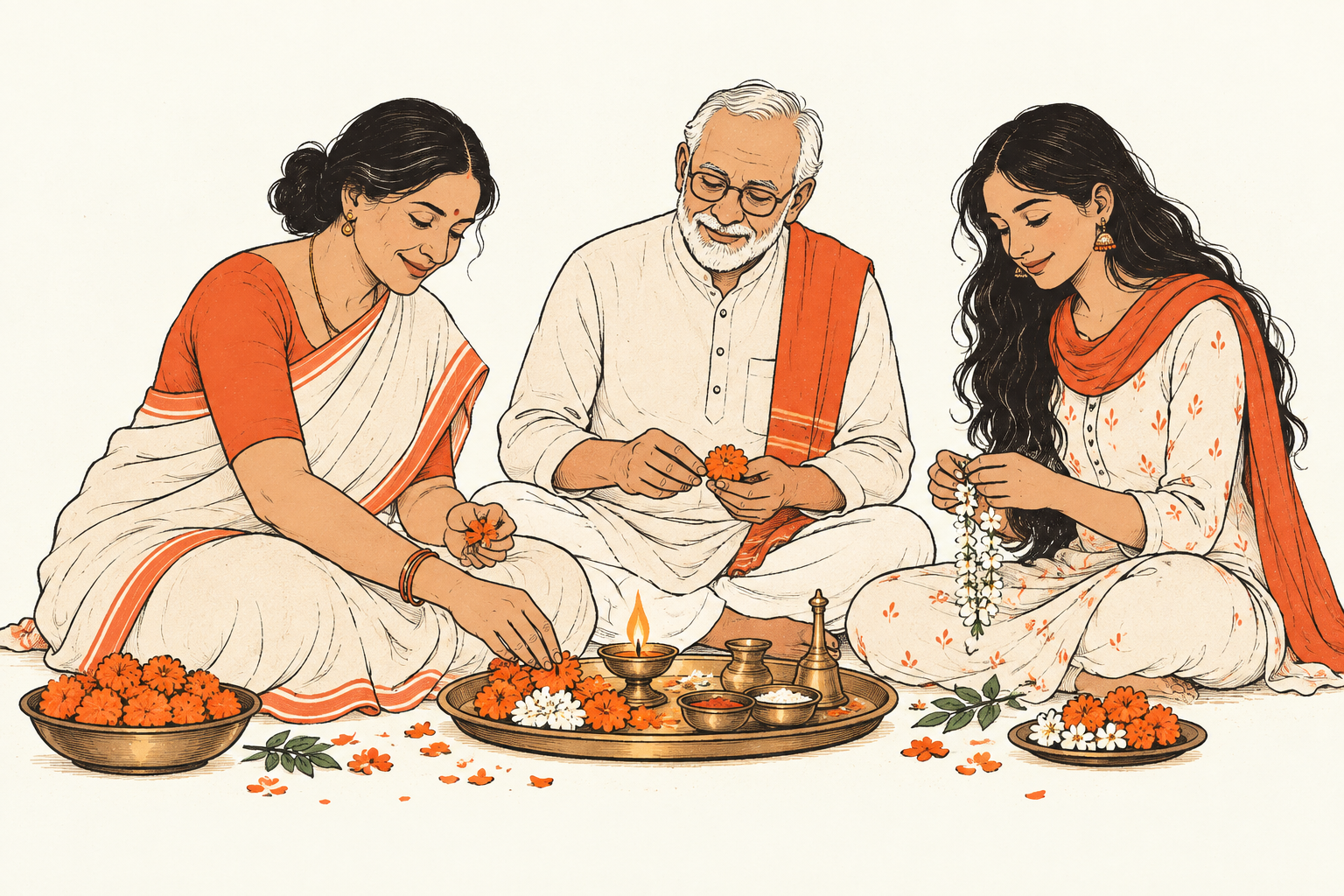
- 01 / deity
- Lord Krishna (Makhan Chor, Govinda, Vasudeva)
- 02 / occasion
- Krishna Janmashtami — Ashtami (8th tithi) of Krishna Paksha in Bhadrapada (August–September)
- 03 / duration
- All-day fast + midnight puja (15–30 minutes)
Krishna Janmashtami celebrates the birth of Lord Krishna, the 8th avatar of Vishnu, at midnight on the 8th day of the dark fortnight in Bhadrapada. The celebration includes a day-long fast (Nirjala or partial), a night-long vigil, a midnight puja at the exact moment of Krishna's birth (believed to be around midnight), and breaking the fast with prasad. The Dahi Handi (human pyramid to break a pot of butter) is the iconic street celebration, while the temple and home worship centres on the bathing and decoration of a baby Krishna idol.
( Prepare the space )
gather the samagri.
- 01
Baby Krishna idol (Laddu Gopal or Bal Gopal) — the most essential item
- 02
Small cradle or swing (Jhula/Palna) for the baby Krishna
- 03
Milk, curd, ghee, honey, and Gangajal for the Panchamrit bath
- 04
Tulsi leaves (essential — Vishnu will not accept offerings without Tulsi)
- 05
Yellow flowers: marigold, yellow rose
- 06
Butter (makhan) and mishri (crystallised sugar) as Krishna's favourite food offering
- 07
Flute motif decoration
- 08
New clothes for the baby idol
- 09
Incense and camphor
- 10
Cow's milk for kheer (rice pudding) and Panjiri (wheat, ghee, sugar sweet) for prasad
( Follow the rite )
step by step, with care.
- 01
Morning: begin the Janmashtami vrat (fast). For Nirjala vrat: no water; for Phalahar vrat: fruits and milk only. Grains and regular food are avoided
- 02
Afternoon: decorate the cradle and prepare the altar. Dress the baby Krishna idol in new clothes
- 03
Evening: light diyas and incense. Begin devotional singing (Bhajans): 'Hare Krishna', 'Govinda Bolo', 'Radhe Krishna'
- 04
Before midnight: prepare the prasad (kheer, panjiri, makhan-mishri)
- 05
At midnight (when the Ashtami tithi and Rohini nakshatra coincide — Krishna's birth constellation): perform the birth ceremony. Ring a bell and blow a conch to mark the birth
- 06
Panchamrit Abhishek: bathe the baby Krishna with Panchamrit (milk, curd, ghee, honey, sugar) and then clean water
- 07
Dress the idol in fresh clothes and place in the cradle. Rock the cradle while singing 'Soja Zara' or any Krishna lullaby
- 08
Offer makhan (butter), mishri, and tulsi leaves as Naivedya
- 09
Conclude with Krishna Aarti: 'Aarti Kunj Bihari Ki' and Hare Krishna Maha Mantra
- 10
Break the fast with prasad after midnight puja. Parana (breaking fast) on Navami morning is traditional for those who could not stay awake
( Main mantra )
Om Namo Bhagavate Vasudevaya
Chant 108 times during the puja.( Questions families ask )
before the ritual begins.
01How is Krishna Janmashtami celebrated at home?+
Home Janmashtami celebration involves keeping a day-long fast, decorating the baby Krishna idol and cradle, holding devotional singing through the evening, and performing the midnight birth ceremony — bathing the Laddu Gopal with Panchamrit, dressing him in new clothes, rocking the cradle, and distributing prasad (makhan, mishri, kheer). The fast is broken after midnight puja with the prasad.
02What is the significance of Rohini Nakshatra on Janmashtami?+
Rohini is the nakshatra (lunar mansion) that the Moon occupied at Krishna's birth, according to the Srimad Bhagavatam (10.3.1-5). When both the Ashtami tithi AND Rohini nakshatra coincide on the same night, it is called Jayanti — an even more auspicious occurrence. On this Jayanti, the vrat (fast) is considered to yield maximum spiritual merit. In years where Ashtami falls on two consecutive days with Rohini on the second, different traditions observe Janmashtami on different nights.
03What is Dahi Handi and how does it relate to Krishna?+
Dahi Handi (curd pot) is a street celebration on the day after Janmashtami (Nandotsav). It commemorates Krishna's childhood mischief of forming human pyramids to steal butter and curd pots hung high by the Gopikas. Teams form human pyramids to break a clay pot filled with curd, butter, and fruits hung at height. The tradition is especially vibrant in Maharashtra and Mumbai, where it has become a competitive community event.
( Keep exploring )
more puja guides.
( Current availability )
check the service route for Krishna Janmashtami Puja.
Pooja World does not take payment for this rite today. The rites index shows a verified official source when one is available and a clear unavailable state when it is not.
Check availability ↗