Loading Pooja World…
( पूजा विधि · भगवान शिव )
रुद्राभिषेक
Rudrabhishek
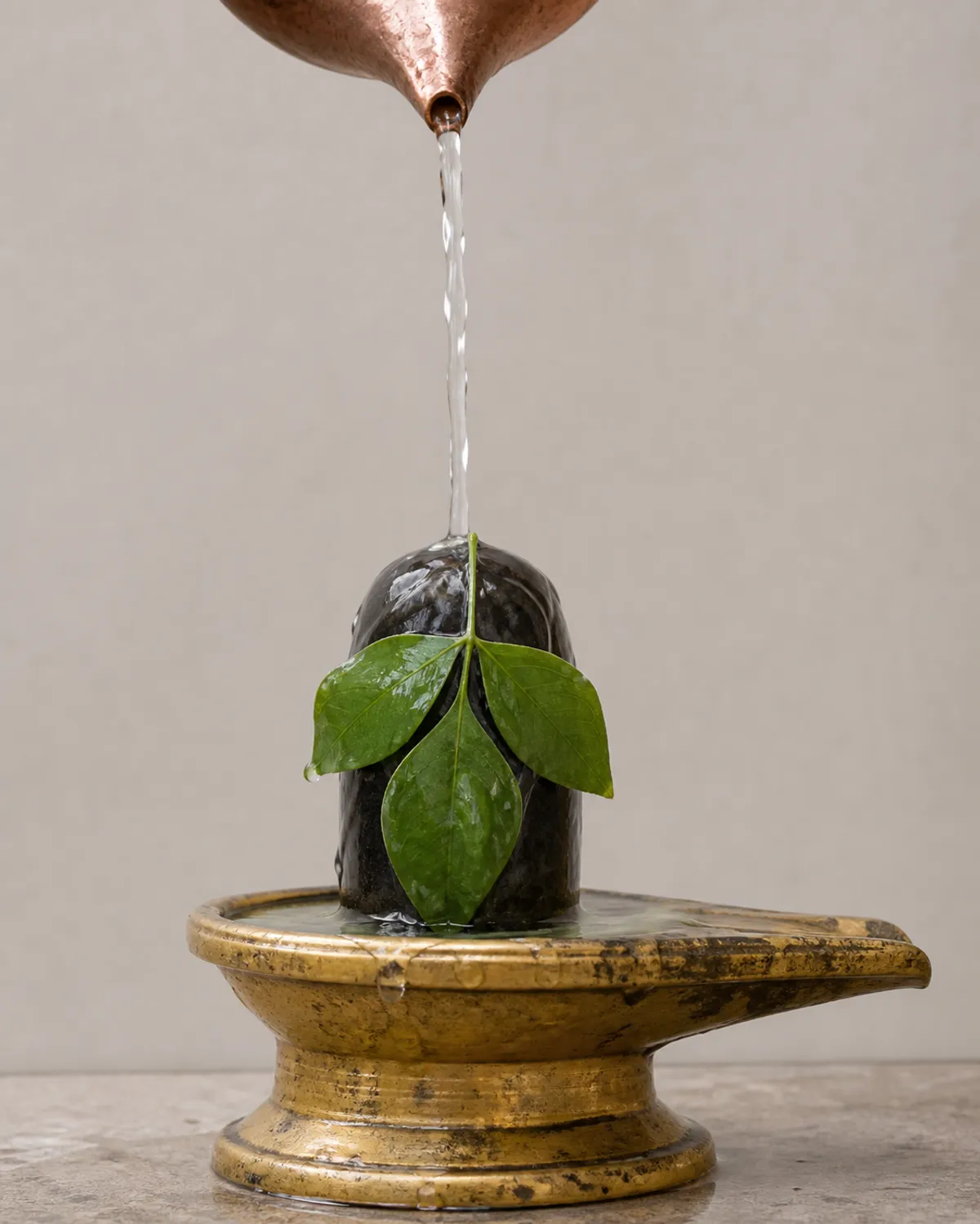
- 01 / देवता
- भगवान शिव
- 02 / अवसर
- सोमवार, प्रदोष, महाशिवरात्रि और श्रावण
- 03 / अवधि
- 1 से 3 घंटे
रुद्राभिषेक में श्री रुद्रम के पाठ के साथ शिवलिंग पर जल, दूध और अन्य पारंपरिक द्रव्य अर्पित किए जाते हैं। इसे स्वास्थ्य, शांति और बाधाओं के निवारण की कामना से किया जाता है।
( स्थान तैयार करें )
पूजा सामग्री जुटाएँ।
- 01
Shivalingam — copper, brass, or stone (natural Narmada Banalinga is most auspicious)
- 02
Panchamrit: cow's milk, curd, ghee, honey, sugar — all preferably from indigenous cows
- 03
Gangajal (Ganga water) for the main abhishek
- 04
Panchapallavah (five sacred leaves: mango, fig, peepal, vata, and pakur) for the Kalash
- 05
Bilva leaves — 108 or 1,008 for complete Rudrabhishek
- 06
Dhatura fruit and white flowers (akanda, ketaki, white lotus)
- 07
Vibhuti (sacred ash from a sacred fire), rudraksha
- 08
Gold or silver vessel for abhishek; copper Kalash
- 09
White sesame seeds, rice, and black sesame for the fire ritual (if Havan is included)
( विधि का पालन करें )
हर चरण सावधानी से करें।
- 01
Invocation: perform Sankalp — state your name, gotra, lineage, and the purpose of the ritual
- 02
Kalash Sthapana: set up the sacred water pot with Panchapallavah leaves and coconut
- 03
Ganesh Puja: perform Ganesha invocation before any major ritual
- 04
Navagraha Puja: invoke the nine planets for cosmic support
- 05
Punyahavachan: purification ritual using mantras and water
- 06
Begin Shri Rudram chanting: the Namakam (11 anuvakas) followed by Chamakam (11 anuvakas) constitute one Rudram cycle
- 07
During each cycle: pour the Panchamrit on the Shivalingam in sequence (milk first, then curd, ghee, honey, sugar, then clean water)
- 08
Offer Bilva leaves with 'Om Namah Shivaya' after each Rudram chapter
- 09
After the chanting: perform the Aarti and circumambulation (Pradakshina) of the Lingam
- 10
Conclude with Maha Mrityunjaya mantra, distribution of vibhuti prasad
( मुख्य मंत्र )
Om Namah Shivaya (and Shri Rudram for the full ritual)
पूजा के दौरान 108 बार जप करें।( परिवारों के प्रश्न )
अनुष्ठान से पहले जानें।
01What is Rudrabhishek and what are its benefits?+
Rudrabhishek is the Vedic ritual of bathing the Shivalingam with sacred substances (Panchamrit, Gangajal) while chanting the Shri Rudram — one of the most ancient hymns from the Yajur Veda. It is performed for health, longevity, removal of obstacles, relief from Saturn and Rahu afflictions, and spiritual purification. The Laghu Rudrabhishek (a shorter version) takes 1–2 hours and is suitable for home performance.
02What is the difference between Laghu Rudrabhishek and Maha Rudrabhishek?+
Laghu Rudrabhishek is the standard Rudrabhishek: Shri Rudram chanted once (Namakam + Chamakam = 1 cycle). Maha Rudrabhishek involves 11 chantings of the Shri Rudram (Ekadasha Rudra). Ati Rudra is 121 repetitions (11 × 11 priests × 1 Rudram each). The level of elaborateness, number of priests, and time invested determines the category.
03Which day is best for Rudrabhishek?+
Monday (Shiva's sacred day), Maha Shivratri, and any day in Shravan month are the most auspicious for Rudrabhishek. Pradosh Kaal (the period of 1.5 hours around sunset on the 13th tithi of each lunar fortnight — both Shukla and Krishna Paksha) is the ideal time. Shiva temples across India hold elaborate Pradosh Rudrabhishek twice monthly.
( आगे देखें )
और पूजा विधियाँ।
( वर्तमान उपलब्धता )
रुद्राभिषेक की सेवा का मार्ग जाँचें।
Pooja World आज इस अनुष्ठान के लिए भुगतान नहीं लेता। पूजा सूची में जहाँ उपलब्ध हो, सत्यापित आधिकारिक स्रोत दिखाया जाता है; अन्यथा अनुपलब्धता स्पष्ट रूप से बताई जाती है।
उपलब्धता जाँचें ↗